Two TACA antibodies, two modes of action: TCX-201 and TCX-101 at AACR 2025
Poster 1581 in Chicago: TCX-201 as an ADC against a fast-internalizing TACA, TCX-101 as a T-cell engager against a slow-internalizing one.
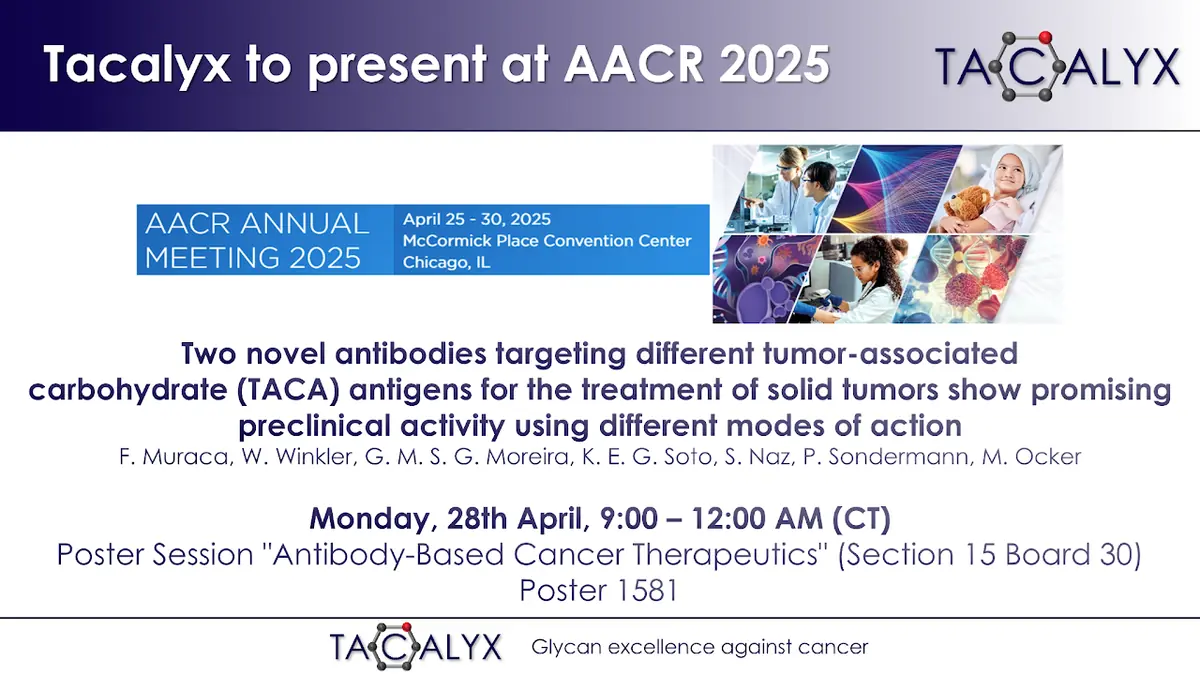
Two novel antibodies targeting different tumor-associated carbohydrate (TACA) antigens for the treatment of solid tumors show promising preclinical activity using different modes of action. AACR Annual Meeting 2025 (April 25–30, McCormick Place Convention Center, Chicago), Poster 1581, Monday, April 28, 2025, 9:00 am–12:00 pm CT, poster session "Antibody-Based Cancer Therapeutics" (Section 15, Board 30).
F. Muraca, W. Winkler, G. M. Schmidt Garcia Moreira, K. E. G. Soto, S. Naz, P. Sondermann, M. Ocker
Summary
- Both antibodies bind their target glycans with nanomolar affinity (SPR, monovalent) and bind cancer cell lines with low EC50 values.
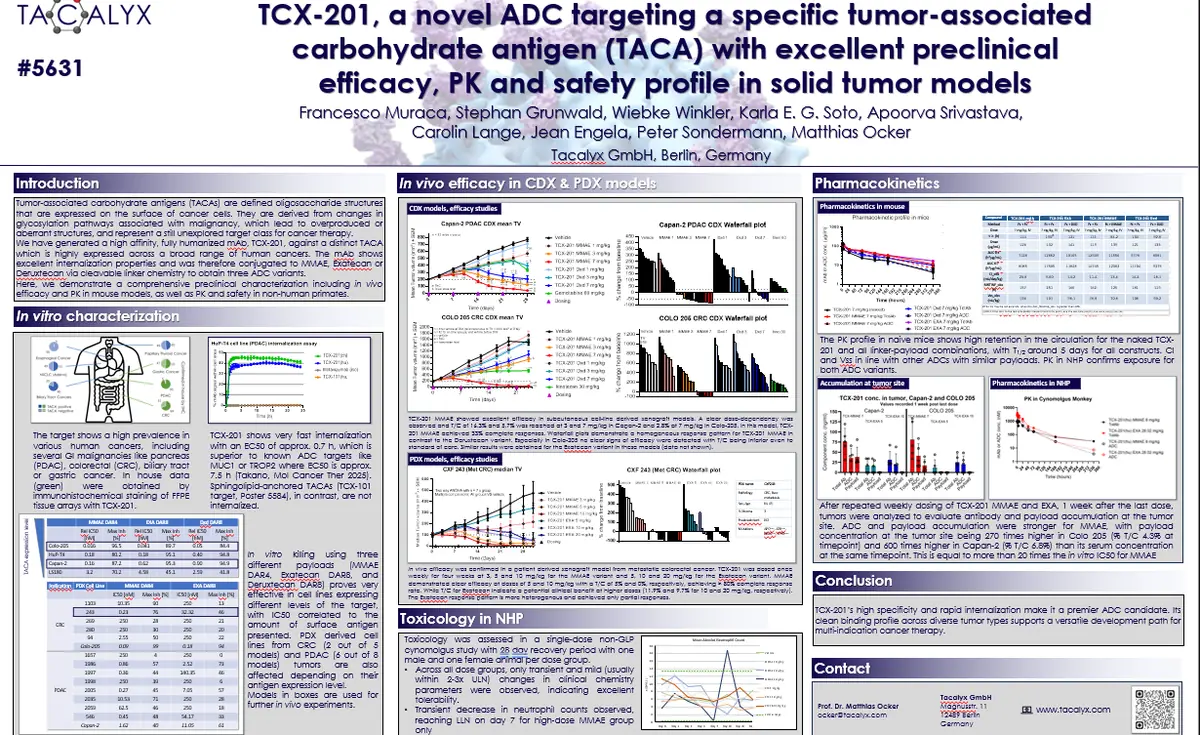
- TCX-201 targets a protein-linked TACA that is highly expressed in pancreatic, gastric and colon cancer. The antibody internalizes very fast, so it was developed as an ADC. MMAE (DAR 4) and exatecan (DAR 8) conjugates killed all target-expressing cell lines tested and inhibited tumor growth in a HuP-T4 pancreatic cancer xenograft at 1, 3 and 7 mg/kg.
- TCX-101 targets a sphingolipid-linked TACA that is highly expressed in colon, lung, ovarian and breast cancer. It internalizes slowly and an ADC showed limited efficacy, so it was developed as a CD3 T-cell engager in a 2+1 CrossMab format. It activated CD8+ T cells and killed tumor cell lines with low to high TACA expression.
The choice of modality follows the biology of each target.